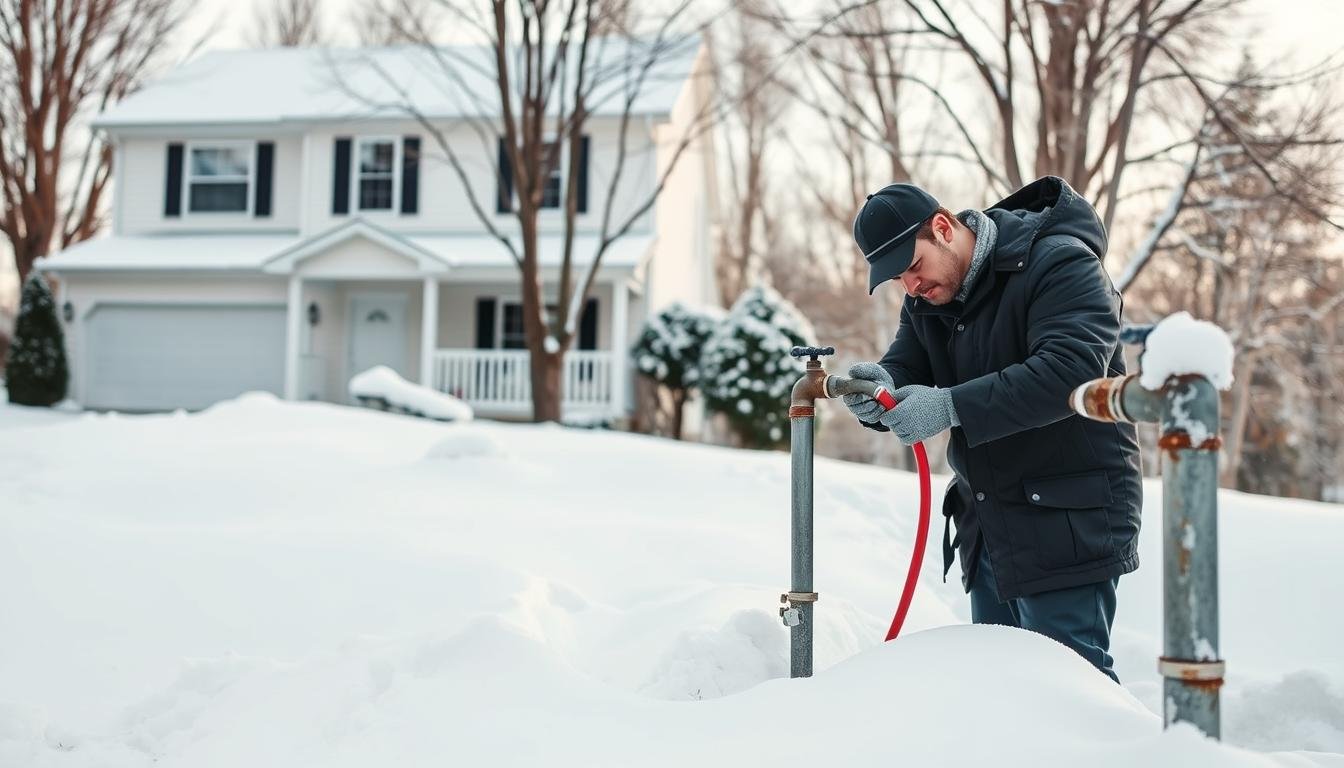
Freezing temperatures can cause pipes to burst, leading to costly water damage. In fact, plumbing-related issues are among the top causes of home insurance claims in the United States.
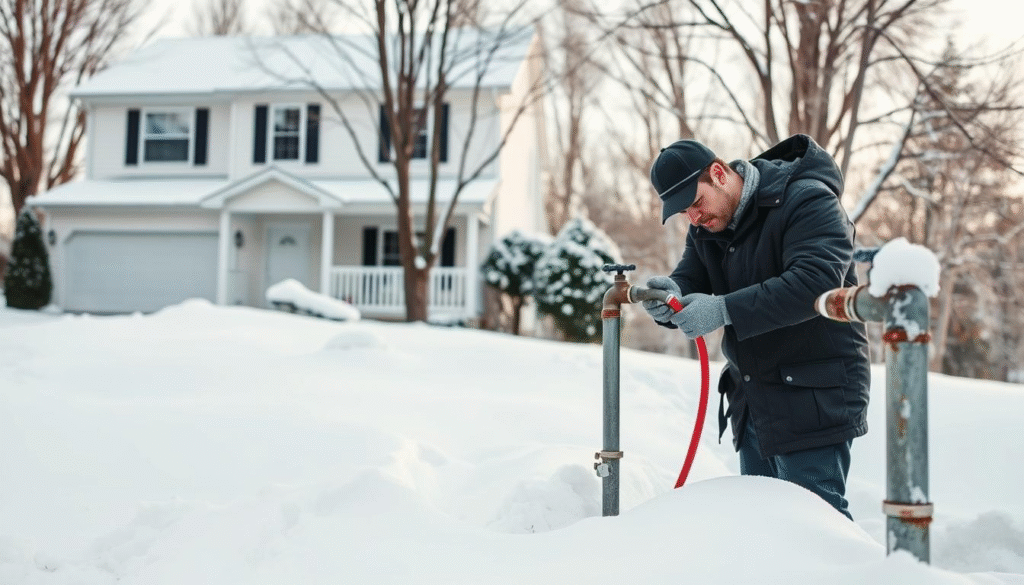
As the cold weather approaches, homeowners must consider winterizing their plumbing to prevent such disasters. The cost of this preventive measure varies based on factors like home size and plumbing system complexity.
Understanding the average cost to winterize plumbing can help homeowners prepare for the expense and make informed decisions about their plumbing systems.
Key Takeaways
- The cost to winterize plumbing depends on several factors, including home size and plumbing complexity.
- Average costs can range widely, depending on the services required.
- Winterizing plumbing is a critical step in preventing costly water damage.
- Homeowners should consider hiring professionals for this task.
- Proper winterization can save money in the long run.
Understanding Plumbing Winterization
As winter draws near, homeowners must prioritize winterizing their plumbing systems to avoid expensive damages. This process shields pipes from freezing temperatures, which can lead to bursting. It’s a critical step for those living in colder climates.
What Does Winterizing Plumbing Mean?
Winterizing plumbing means preparing a home’s plumbing for the cold months ahead. It involves steps like draining water from pipes, insulating exposed ones, and sealing cracks. These actions help keep the plumbing system safe and operational during winter.
Why Winterizing Your Plumbing Is Essential
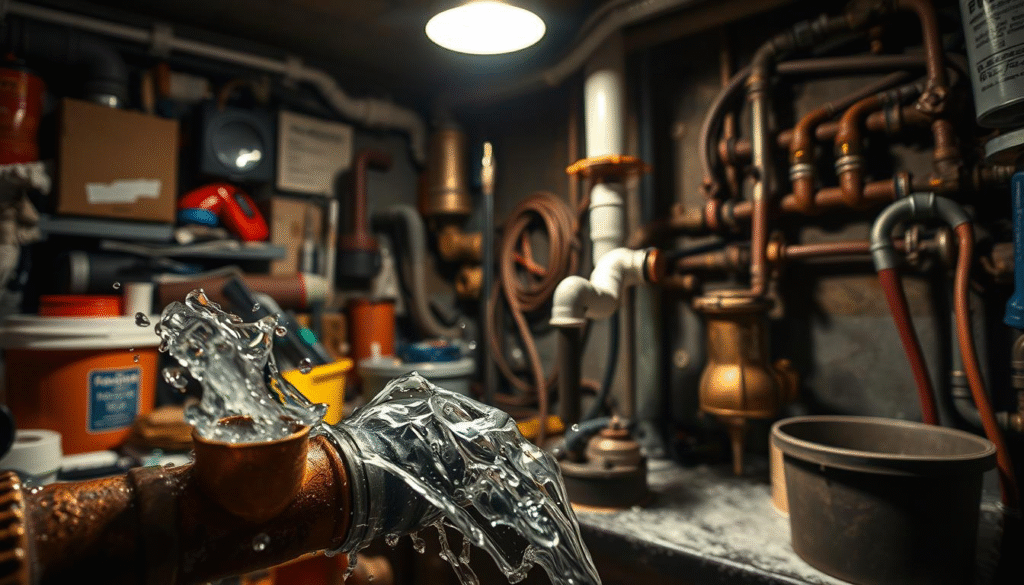
Winterizing your plumbing is vital to prevent the costly damage from frozen and burst pipes. Frozen pipes can cause water damage, mold, and expensive repairs. By winterizing, homeowners can avoid these problems and keep their homes safe.
The Risks of Frozen and Burst Pipes
Frozen and burst pipes pose significant financial risks and inconvenience. The main dangers include:
- Water damage to walls, floors, and ceilings
- Mold growth and related health issues
- Expensive repair costs
- Disruption to daily life due to plumbing system downtime
How Much Does It Cost to Winterize Plumbing?
The cost to winterize plumbing varies widely. It depends on your property’s size and the plumbing system’s complexity. Knowing these costs helps homeowners and business owners budget and avoid damage.
Average Cost Breakdown
DIY winterization costs $50 to $200. Professional services, though, can range from $100 to $500 or more. This depends on the job’s complexity.
DIY vs. Professional Winterization Costs
Deciding between DIY and professional winterization depends on your plumbing skills and system complexity. DIY involves buying supplies. Professional services include labor costs.
Typical Price Ranges for Different Services
- Insulating exposed pipes: $50-$100
- Draining and winterizing irrigation systems: $100-$300
- Winterizing swimming pools: $200-$500
- Full plumbing system winterization: $200-$1000
Getting quotes from multiple professionals is key. It helps you compare prices and services, ensuring you get the best value.
Factors That Affect Winterization Costs
Understanding the factors that influence plumbing winterization expenses is essential for homeowners. The cost of winterizing plumbing can vary significantly based on several key elements.
Home Size and Plumbing System Complexity
The size of your home and the complexity of your plumbing system play a critical role in determining winterization costs. Larger homes with more complex plumbing systems require more time and materials to winterize. This increases the overall cost.
Geographic Location and Climate Considerations
Your geographic location and the local climate are significant factors. Areas with harsher winters may require more extensive winterization measures. This affects the cost of winterizing pipes.
Age and Condition of Plumbing System
The age and condition of your plumbing system also impact winterization costs. Older systems may require additional maintenance or special care during the winterization process.
Accessibility of Pipes and Fixtures
Easily accessible pipes and fixtures can reduce labor costs. Hard-to-reach areas, on the other hand, may increase the overall expense of winter plumbing maintenance cost.
Key factors to consider:
- Home size and plumbing complexity
- Geographic location and climate
- Age and condition of the plumbing system
- Accessibility of pipes and fixtures
By understanding these factors, homeowners can better estimate the costs associated with winterizing their plumbing systems.
DIY Plumbing Winterization: Step-by-Step Guide
As winter approaches, protecting your plumbing from freezing is critical. Winterizing your plumbing system can prevent costly damages. It ensures your home remains safe and comfortable during the cold months.
Tools and Materials Needed
Before starting, gather the necessary tools and materials. You’ll need pipe insulation, frost-proof faucets, and duct tape for sealing. Having everything ready will streamline the process.
Shutting Off the Main Water Supply
The first step is to shut off the main water supply. Find the main shut-off valve and turn it clockwise. This step is vital to prevent water from freezing in the pipes.
Draining the Water System
After shutting off the main water supply, drain the system. Start by opening faucets and fixtures to drain the water.
Faucets and Fixtures
Open all faucets, including outdoor ones, to drain the water. Remove any hoses from outdoor faucets to prevent freezing.
Water Heater
Check the manufacturer’s instructions for your water heater’s winterization needs. Some may require draining or special preparation.
Insulating Pipes and Fixtures
Insulating exposed pipes and fixtures is key to prevent freezing. Use foam pipe insulation or heat tape to wrap pipes in unheated areas like garages, basements, or crawlspaces.
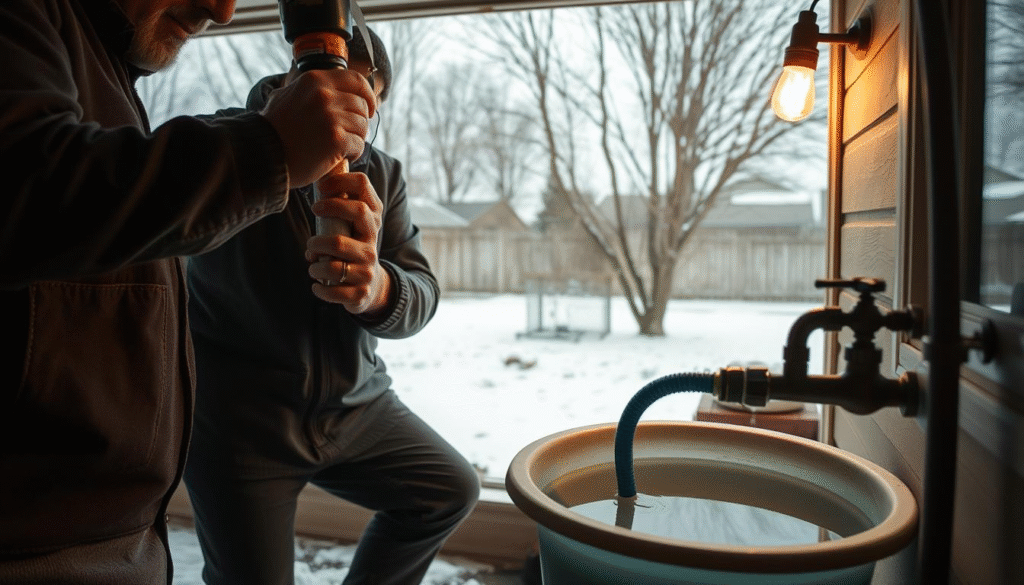
Cost Breakdown for DIY Materials
The cost of DIY winterization materials varies based on your home’s size and plumbing complexity. Expect to spend $50 to $200 on materials like pipe insulation, frost-proof faucets, and duct tape.
By following these steps, you can effectively winterize your plumbing system. This protects your home from damage. DIY winterization is a cost-effective solution, saving you money compared to hiring a professional.
Professional Winterization Services
Many homeowners choose professional plumbing winterization services for their expertise and thoroughness. These services aim to protect a home’s plumbing system from freezing temperatures. They offer a detailed approach to safeguard against the risks of winter.
What Professional Services Include
Professional winterization services involve a detailed inspection of the plumbing system. They drain and insulate pipes and seal any leaks or vulnerabilities. This ensures all plumbing aspects are protected, giving homeowners peace of mind.
Finding Reputable Plumbing Contractors
To find a reliable plumbing contractor, consider their experience, customer reviews, and licensing. It’s vital to choose a contractor who knows local regulations and has a history of quality service.
Questions to Ask Before Hiring
Before hiring, ask about the service scope, cost, and any extra fees. Knowing what’s included and what to expect can avoid misunderstandings.
Average Service Fees and Package Deals
The cost of professional plumbing winterization varies by home size, plumbing complexity, and location. On average, homeowners pay between $100 and $500 for full winterization services.
| Service | Average Cost | Description |
| Basic Winterization | $100-$200 | Includes draining pipes and basic insulation |
| Comprehensive Winterization | $200-$500 | Includes thorough inspection, draining, insulating, and sealing leaks |
| Emergency Winterization | $300-$600 | Priority service for urgent winterization needs |
Knowing the average costs and what they cover helps homeowners make better choices when picking a winterization service.
Winterizing Different Types of Properties
Winterizing plumbing is vital for all properties, whether homes or commercial buildings, to avoid expensive repairs. Each type of property has its own specific needs for winterizing its plumbing system.
Primary Residences
Winterizing plumbing in primary residences means a detailed check of the plumbing system. This includes pipes in unheated areas like garages, basements, or crawlspaces. Homeowners should insulate exposed pipes and seal drafts around windows and doors to keep cold air out. The cost to winterize plumbing in a home varies, but it’s usually between $50 and $200. This depends on the plumbing system’s complexity and the methods used.
Vacation Homes and Seasonal Properties
Vacation homes or seasonal properties need extra care due to their sporadic use. It’s essential to drain the water system completely to prevent pipes from freezing and bursting. This involves shutting off the main water supply, draining the pipes, and sometimes using compressed air to remove any remaining water. Winterizing these properties can be more expensive because of the need for thorough draining and possibly hiring a professional.
Rental Properties
Landlords must winterize the plumbing in rental properties to protect their investment. This includes inspecting the plumbing, insulating pipes, and ensuring tenants know what to do in extreme cold. The cost of winterization can be included in the property’s maintenance budget.
Commercial Buildings
Commercial buildings have complex plumbing systems that require a detailed winterization plan. This may involve hiring professionals to inspect and winterize the plumbing system, including industrial equipment that uses water. The commercial plumbing winterizing cost is significant but necessary to prevent costly damages. The cost is influenced by the building’s size, plumbing system complexity, and location.
Understanding the specific needs of different properties is essential for effective winterization. By taking the right steps, property owners can avoid the costly repairs associated with frozen and burst pipes.
- Primary residences require insulation and draft sealing.
- Vacation homes need thorough draining of the water system.
- Rental properties require landlord oversight.
- Commercial buildings demand a detailed winterization plan.
Special Considerations for Different Plumbing Fixtures
As winter draws near, it’s vital to address the unique needs of various plumbing fixtures in your home. Each fixture has its own requirements to avoid damage from freezing temperatures.
Outdoor Spigots and Garden Hoses
Outdoor spigots and garden hoses are highly susceptible to freezing. To protect them, disconnect and drain hoses. Installing freeze-proof spigots is also a wise move. Insulating exposed pipes can further prevent freezing.
Swimming Pools and Irrigation Systems
Winterizing the filtration system and draining the pool equipment are essential for swimming pools. For irrigation systems, draining and blowing out the pipes is necessary to prevent water from freezing.
Water Heaters and Boilers
Before winter, inspect and maintain water heaters and boilers. Look for leaks, ensure they are well-insulated, and consider a professional inspection.
Washing Machines and Dishwashers
Winterize washing machines and dishwashers by disconnecting and draining hoses. Leave the doors open to prevent moisture buildup.
| Fixture | Winterization Task | Cost Estimate |
| Outdoor Spigots | Disconnect and drain hoses | $0 – $100 |
| Swimming Pools | Winterize filtration system | $100 – $500 |
| Water Heaters | Inspect and maintain | $50 – $200 |
By implementing these winterization tips, homeowners can safeguard their plumbing fixtures and sidestep expensive repairs. The cost of winterizing pipes and fixtures varies, but it’s a necessary investment to preserve your plumbing system’s integrity.
Regional Cost Variations Across the United States
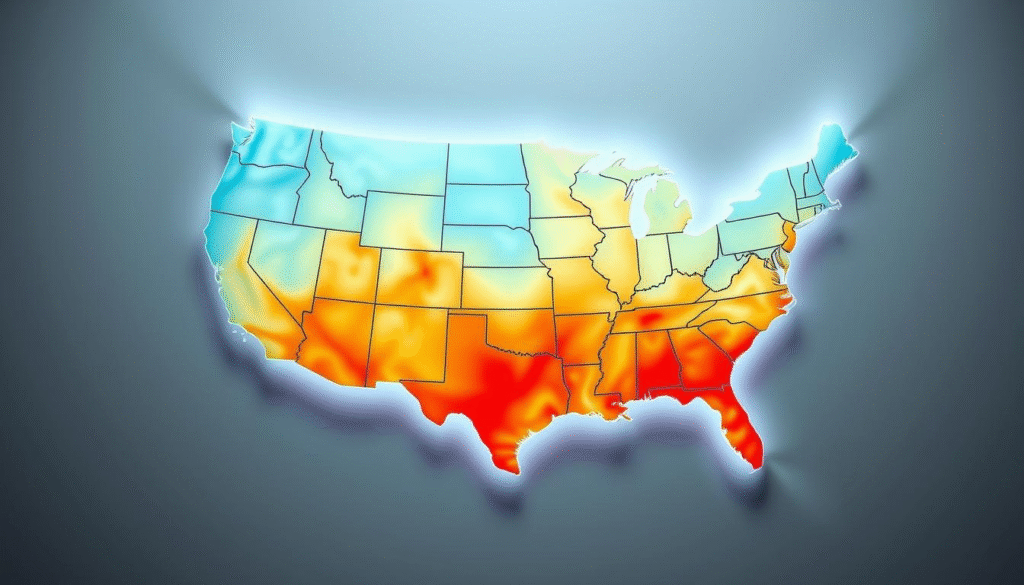
The cost of winterizing plumbing varies significantly across different regions in the United States. This variation is mainly due to diverse climate conditions. The severity of winter weather across the country plays a key role in this cost difference.
Northern States with Severe Winters
In northern states like Minnesota, Wisconsin, and New York, the cost of winterizing plumbing is higher. Harsh winters require more extensive measures to protect plumbing systems from freezing. Homeowners in these areas may need to invest in more robust insulation, heating elements, or specialized plumbing solutions.
Southern States with Milder Winters
In southern states like Florida, Texas, and California, where winters are generally milder, the cost is lower. Simpler and less costly measures, such as basic insulation or minimal draining of pipes, may suffice in these regions.
Mountainous and Rural Areas
Mountainous and rural areas present unique challenges for plumbing winterization. Their remote locations and potentially harsh weather conditions increase the cost. The increased difficulty in accessing pipes and the need for specialized equipment also contribute to higher costs.
Emergency Winterization for Unexpected Cold Snaps
Regions experiencing unexpected cold snaps may require emergency winterization services. These services come at a premium due to the urgent need to prevent or mitigate damage to plumbing systems.
In conclusion, the cost of winterizing plumbing is influenced by various regional factors. These include climate severity, geographic location, and the complexity of plumbing systems. Understanding these factors helps homeowners and property managers prepare for the costs of winterizing their plumbing.
Long-Term Cost Benefits of Proper Winterization
Winterizing plumbing is more than just a quick fix; it offers lasting financial advantages. It prevents costly problems, cuts down on energy use, and extends your plumbing’s life. These benefits can significantly impact your wallet.
Preventing Expensive Pipe Damage
One major advantage is avoiding expensive pipe damage. Frozen pipes can burst, causing significant repairs and water damage. Winterizing your plumbing helps avoid these issues. Here are some key points to consider:
- Insulating exposed pipes in unheated areas like the garage, basement, or crawlspace.
- Draining water from outdoor faucets and irrigation systems.
- Sealing any drafts or gaps near pipes to prevent cold air from entering.
Reducing Energy Costs
Winterization also reduces energy costs. Insulated pipes require less heating effort, saving you money on bills. This can lead to lower energy bills over time.
Extending Plumbing System Lifespan
Proper winterization extends your plumbing system’s life. It protects pipes from freezing and reduces system strain. This can delay the need for expensive replacements.
Insurance Considerations and Savings
Some insurance companies offer discounts for homeowners who winterize their plumbing. This can lower your insurance premiums by reducing damage risk.
In conclusion, the long-term cost benefits of proper winterization are significant. Investing in winterizing your plumbing can lead to substantial savings and peace of mind.
Common Winterization Mistakes to Avoid
Many homeowners make critical mistakes when winterizing their plumbing, leading to unnecessary expenses. Understanding these common pitfalls can help you take the right steps to protect your home’s plumbing system.
Incomplete Draining
One of the most significant mistakes is not draining the plumbing system completely. Water left in the pipes can freeze, causing them to burst. Ensure that you drain all water from pipes, including unheated areas like the garage, basement, or crawlspace.
Forgetting Outdoor Fixtures
Outdoor spigots and garden hoses are often overlooked during winterization. Disconnect and drain hoses, and consider installing freeze-proof faucets to prevent damage.
Inadequate Insulation
Pipes in unheated areas should be well-insulated to prevent freezing. Use foam pipe insulation or wrap pipes with heat tape or thermostatically controlled heat cables.
Improper Thermostat Settings
Maintaining a consistent temperature in your home, even when you’re away, can help prevent pipes from freezing. Setting your thermostat to a minimum of 55°F (13°C) is recommended.
Neglecting Regular Checks During Winter
Regularly check your plumbing system during the winter months for signs of leaks or freezing. Early detection can prevent costly repairs.
Conclusion
Winterizing your plumbing is essential for your home’s safety during the cold months. It involves shutting off the main water supply, draining the system, and insulating pipes. These steps help prevent costly damages and ensure your plumbing lasts longer.
The importance of winterizing plumbing is immense. It prevents frozen and burst pipes, avoiding expensive repairs. The costs of winterizing plumbing vary based on home size, plumbing complexity, and location. Yet, the benefits far outweigh the costs, saving homeowners from future expenses.
Understanding the summary of winterizing plumbing costs and the necessary steps is key. Homeowners can either DIY or hire a professional. Regardless, winterizing your plumbing is a critical task that should not be ignored.
Sources
For more information on winterizing plumbing and understanding the associated costs, refer to the following reliable sources:
The American Red Cross provides guidance on preparing homes for extreme weather conditions. They offer tips on winterizing plumbing.
The U.S. Department of Energy offers insights on energy-saving measures and home maintenance. This includes plumbing winterization.
For specific plumbing winterization techniques and costs, visit the Plumbing-Heating-Cooling Contractors Association website. They provide professional advice and resources.
These sources on plumbing winterization costs and references for winterizing plumbing provide valuable information. They help homeowners make informed decisions about protecting their properties during harsh winter conditions.
FAQ
What is the average cost to winterize plumbing?
The cost to winterize plumbing varies widely. It can range from $50 to $500 or more. This depends on the plumbing system’s complexity, your location, and whether you choose to hire a professional or do it yourself.
How much does it cost to hire a professional to winterize plumbing?
Hiring a professional for plumbing winterization can cost between $100 to $500. The average price is around $200 to $300. This varies based on the services provided and your location.
What are the costs associated with DIY plumbing winterization?
DIY plumbing winterization can be quite affordable. Costs range from $20 to $100. This depends on the materials needed, such as insulation, pipe covers, and other supplies.
How does the size of my home affect the cost of winterizing plumbing?
The size of your home significantly impacts winterizing plumbing costs. Larger homes require more extensive and expensive measures. This increases the overall cost.
Are there any additional costs for winterizing specific plumbing fixtures?
Yes, winterizing specific fixtures like outdoor spigots, swimming pools, and irrigation systems adds extra costs. These can range from $20 to $100 or more per fixture. Costs vary based on the fixture’s type and complexity.
Can winterizing plumbing help reduce my energy bills?
Yes, winterizing your plumbing can lower energy bills. It prevents frozen pipes and reduces strain on your water heater and other appliances.
How often should I winterize my plumbing?
It’s recommended to winterize your plumbing annually. Do this before winter starts to avoid damage from freezing temperatures.
What are the consequences of not winterizing my plumbing?
Failing to winterize your plumbing can lead to costly damages. Frozen and burst pipes can result in thousands of dollars in repairs.
Are there any regional variations in the cost of winterizing plumbing?
Yes, regional climate differences affect winterizing plumbing costs. Areas with harsher winters may need more extensive and expensive measures.
Can I winterize my plumbing myself, or do I need to hire a professional?
While DIY winterizing is possible, hiring a professional offers assurance and expertise. This is beneficial for complex systems or if you’re unsure about the process.